In energy storage PCS, new-energy vehicle three-electric systems, and power supply testing projects, current sensors are critical components that support full-system validation and mass delivery. For the same sensor model, engineers and procurement teams often have different focuses when reviewing the datasheet. In many projects, disagreements arise not because of issues with the product itself, but because the two sides use different selection and evaluation criteria.
engineers focus on solution implementation, test validation, and long-term operational stability; procurement teams prioritize cost, delivery timelines, and supply chain management. The two groups have different priorities—neither is right or wrong. Clarifying these differences helps balance performance with practical deployment, reducing rework during selection and issues with arrival and integration.
Engineer: Prioritize matching operating conditions and ensure the metrics can withstand field testing
The primary criterion for engineers when selecting components: whether can meet the system's signal acquisition requirements and ensure data reliability across all operating conditions .
1. Core electrical specifications: range, bandwidth, linearity, zero-point temperature drift, and phase error. Dynamic testing focuses on step response and ripple suppression; steady-state long-term monitoring emphasizes zero-point drift to prevent gradual data offset. Fluxgate, open-loop Hall, and closed-loop Hall sensors are suited to different applications and must match signal types such as DC, low-frequency AC, and pulses.
2. Anti-interference and Environmental Adaptability:The magnetic field, common-mode voltage, and electromagnetic interference inside power test benches and energy storage cabinets are complex. Attention must be paid to magnetic shielding, common-mode suppression, wide temperature range, and vibration protection; during bench calibration and HIL simulation, waveform distortion can affect algorithm calibration.
3. Output and system compatibility: Pay attention to analog output noise and accuracy, or digital protocols and sampling synchronization, to ensure compatibility with the data acquisition card, controller, and test system. No matter how good the sensor specifications are, if the interfaces and synchronization do not match, the entire acquisition chain will malfunction.
4. Long-term reliability and reproducibility:For aging, high/low temperature, and long-term continuous testing scenarios, where parameter consistency and aging drift are critical, refer to third-party test reports to facilitate issue reproduction and fault diagnosis.
In simple terms:
Engineers care about: once is installed, whether the measured data is accurate and stable, and whether it will malfunction due to changing operating conditions.
Procurement concerns: Prioritize supply chain controllability and focus on the overall cost of bulk implementation
The primary criterion for procurement selection of : Whether the supply chain is stable and overall risks are controllable, provided that the project's technical requirements are met .
1. Business cost: includes unit price, tiered bulk pricing, accompanying cable accessories, samples, and testing-related expenses; it considers the full project lifecycle cost rather than just the individual product price.
2. Delivery capability: verify whether delivery dates align with the project schedule, stocking plans, and minimum order quantities; confirm support for transitioning from small-batch pilot production to large-scale manufacturing; ensure supply during peak seasons to prevent project delays.
3. Qualification documents: confirms that supply documentation, specifications, factory calibration certificates, and test files are complete, facilitating archiving and project review.
4. Supply and After-sales: assess production capacity and supply fluctuations; understand after-sales channels, repair cycles, replacement plans, and version change notification mechanisms to mitigate risks associated with product discontinuation or redesign.
5. Standardized selection: preferred standard models, reducing custom SKUs and easing inventory management pressure.
Simply put, buyers care about: being able to secure a stable supply with complete documentation and a controllable budget, while avoiding the risk of supply disruptions in subsequent bulk deliveries .
Typical scenarios prone to disagreement
engineers favored a high-bandwidth, high-precision model with good performance suitable for dynamic testing, but during procurement they found long lead times, relatively high unit prices, and difficulty in stocking;
procurement selected standard models with good cost-performance and ample stock; after engineers verified the parameters, they found that the bandwidth was insufficient and the temperature drift did not meet the high- and low-temperature calibration conditions;
price comparison only compares the nominal measurement range and unit price, ignoring implicit indicators such as linearity and temperature drift. Only when the sample is tested on the bench do they discover that the error exceeds the limit, delaying the project schedule.
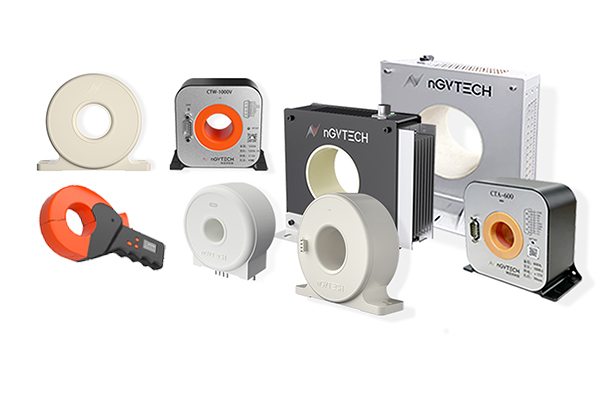
Wuxi nGV CTA/CTB/CTW, CTF and other series products were designed from the outset to address engineers' concerns regarding bandwidth, temperature drift, magnetic shielding, and full-scale linearity. At the same time, a standardized product line and a stable delivery system have been established, accompanied by complete calibration reports and technical documentation, facilitating engineers in conducting operational verification and enabling procurement teams to manage bulk supply chains, thus catering to such selection scenarios.
Efficient Collaborative Selection Approach
For selection, there is no need for one-sided compromise; two-tier screening thresholds can be set:
First, engineers determine the technical baseline list, clarifying hard indicators and risk items; models that fail to meet the standards are directly excluded and do not proceed to price comparison;
Step two: Procurement compares prices, lead times, supply chain, and after-sales service within the qualified list to select the preferred solution. If customization is required, communicate lead time and cost changes in advance, assess necessity, and prioritize standard models.
The right current sensor strikes a balance between technical capability and supply chain stability. Engineers adhere to operating conditions and testing requirements, while procurement manages batch delivery risks and standardizes evaluation criteria, ensuring the credibility of data for three-electric and energy storage projects, facilitating smooth project progress, and reducing time and cost associated with component replacement and debugging.