On August 6, the current measurement standards and basic requirements for energy storage inverters were discussed. Today, we will continue to discuss the necessity of high-precision current measurement for energy storage inverter test fixtures, as well as project implementation experience.
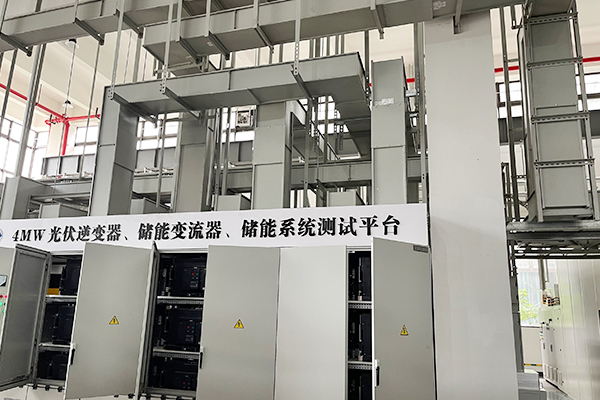
3. Insufficient current measurement accuracy can lead to cascading consequences
If the current measurement accuracy in PCS production testing is insufficient, it will lead to a series of serious consequences, including but not limited to the following:
3.1 Product Performance “Misrepresentation” and Compliance Risks
Efficiency measurements are inaccurate, harmonic distortion is “smoothed out,” and excessive ripple is masked—insufficiently accurate measurement equipment can cause products that should be deemed non‑compliant to leave the factory with defects. Once such products are connected to the grid, they may at best incur penalties from the grid operator, and at worst degrade the power quality of the grid. As grid‑forming energy storage systems have far higher requirements than grid‑following systems for overcurrent capability and response speed, any inherent shortcomings of the equipment are further exacerbated; the lack of accuracy during production testing will be magnified manyfold into safety hazards in actual operation.
3.2 Failure to traverse the fault resulted in disconnection from the network
In low-voltage/high-voltage ride-through (LVRT/HVRT) tests, the PCS must precisely inject reactive/active current according to the grid voltage dip depth, with a response time typically required to be less than 30ms. If the current-sampling accuracy is insufficient, the control algorithm will compute incorrect command currents, and the PCS will be unable to provide effective support during a grid fault—resulting not only in failure to pass national standard tests but also potentially exacerbating grid collapse in real-world grid incidents.
3.3 Protection system maloperation or failure to operate
The overcurrent, short-circuit, and overload protection of the PCS all rely on real-time current sampling. When the sampled value is too low, the IGBTs and other power devices inside the equipment may already be overheating due to overcurrent, yet the controller “turns a blind eye,” potentially causing the power module to fail outright; when the sampled value is too high, the system frequently triggers false alarms, leading to sudden shutdowns of the PCS under normal load conditions and thereby affecting the revenue of the energy storage power station.
3.4 Economic settlement loss
For energy storage stations participating in the electricity spot market, the metering within the PCS relies on current sensors. Inaccurate measurement of charge and discharge currents can lead to deviations in the calculation of charged and discharged energy—overestimating charging (resulting in overpayment of electricity bills) and underestimating discharging (resulting in undercollection of electricity bills). This cumulative “buy high, sell low” error can, in large-scale power stations, amount to economic losses of several million yuan per year.
IV. Comprehensive Requirements for Current Sensors
The operating environment of the energy storage inverter is extremely harsh, placing comprehensive performance requirements on the current sensor. Accuracy is only a basic requirement; stability, bandwidth, and anti-interference capability are all indispensable.
4.1 High precision: a leap from 0.5% to 0.01%
The requirements for accuracy vary significantly across different application scenarios. To accurately calculate SOC and SOH, energy storage inverters demand current measurement accuracy better than 1%; in some high-end applications, even 0.3% or higher is required. Meanwhile, during type testing and factory acceptance testing, specialized test platforms require DC current measurement accuracy no greater than 0.2% and AC current measurement accuracy no greater than 0.1%.
sensors with an accuracy class no lower than 0.1 are required to provide reliable data support in PCS production testing. The high-precision fluxgate current sensor developed by Wuxi nGV boasts an industrial‑grade accuracy of 0.01% and even 10ppm, ensuring high precision across a wide dynamic range, while also offering the advantages of low temperature drift and low zero drift, making it the preferred current sensor for energy storage PCS testing.
4.2 Bandwidth: Captures high-frequency switching transients
The power devices inside the PCS, such as IGBTs and MOSFETs, operate in high-frequency switching mode (typically 16-20kHz), generating PWM current waveforms that contain numerous higher-order harmonics. Current sensors must have sufficient bandwidth—typically greater than 200kHz, and up to the MHz range for high-end applications—to accurately capture the current waveform and prevent signal distortion.
Insufficient bandwidth can lead to phase delay and amplitude error, directly affecting the accuracy of power calculations. Some high-end fluxgate current sensors have a bandwidth ranging from DC to 1.5MHz, providing ample headroom for high-frequency dynamic testing in PCS.
4.3 Strong electromagnetic interference resistance
PCS internally contains typical strong electromagnetic interference sources—switching devices generate high di/dt, and high-frequency transformers produce strong magnetic fields. Current sensors must maintain measurement accuracy in such a harsh electromagnetic environment. High-performance fluxgate sensors enhance their anti-interference performance through measures such as reinforced shielding design and a high common-mode rejection ratio (CMRR).
4.4 Wide dynamic range and full-temperature-range stability
PCS must accurately measure currents ranging from milliampere-level small currents in standby mode to thousands of amperes at full-power operation. The sensor not only needs to maintain high accuracy across the entire measurement range but also must exhibit stable performance over the full temperature range of -40℃ to +85℃. Fluxgate technology, owing to its hysteresis-free characteristics, can still maintain low zero bias and high accuracy even after large current surges, with temperature drift as low as ±15ppm/℃.
4.5 Long-term reliability and response speed
The design life of energy storage power stations is typically 10-15 years, and the current sensors in the PCS must operate stably over the long term. At the same time, the step-current response speed must be extremely fast—specifically, the delay to reach 90% must be less than 500ns. During the production of energy-storage PCSs, the production line runs continuously, and the current sensors operate without interruption, placing very high demands on product stability. The high-precision, wide-range sensors developed by Wuxi nGV have been in continuous, long-term, fault-free operation at leading domestic manufacturers in the energy-storage PCS industry, earning widespread recognition.
Wuxi nGV Technology Co., Ltd., formerly known as Pule Ruisi (Beijing) Electronic Technology Co., Ltd., has been dedicated to high-precision current sensors for over a decade. Its core team comprises PhDs who graduated from the Institute of Microelectronics of the Chinese Academy of Sciences, Beijing University of Aeronautics and Astronautics, and Shandong University, possessing a solid R&D foundation and a robust portfolio of core technologies. The company’s main products include large-range, high-precision current and voltage sensors, as well as testing systems. Its products have been certified by authoritative institutions such as the National Institute of Metrology, China, and it supplies high-precision, high-bandwidth, large-range current sensors to leading domestic manufacturers in the energy storage inverter sector, earning widespread recognition from key industry clients. The company is committed to becoming an internationally first-class manufacturer of high-precision current sensors.