I. High-precision current measurement is crucial in the production and testing of energy storage inverters
The energy storage converter (Power Conversion System, PCS) is known as the “heart” of the energy storage system, undertaking the core mission of bidirectional power conversion between the battery and the grid. The importance of this “heart’s” health is self-evident. According to statistics from the China Electricity Council in mid-2025, for the first time, PCS surpassed battery systems and cell thermal runaway to become the primary cause of unplanned outages at energy storage power stations.
As power plant scales grow rapidly, with hundreds or even thousands of PCS units operating in concert within a single large array, issues that are difficult to detect during individual-unit testing—such as circulating currents, loss of synchronism, and wide-band oscillations—tend to surface collectively on-site. Meanwhile, PCS units frequently participate in peak-shaving and frequency regulation, switching at high rates between charging and discharging, while their power modules operate under heavy load for extended periods, continually widening the fault‑diagnosis window. Against this backdrop, quality control during the production‑testing phase has become more critical than ever.
2024 year 8 month , Sungrow’s 2.5MW energy storage inverter successfully passed the new national standards GB/T 34120-2023 and GB/T 34133-2023 grid-connection performance tests in one go, becoming the first in the industry to obtain the special certification from the China Electric Power Research Institute for “low-voltage and high-voltage ride-through as well as continuous fault ride-through.”
On 2025 year, 11 month, 17 day, , Inovance Technology’s Xi’an energy storage and power system manufacturing base, with an investment of approximately 10 billion yuan, officially began operations in Fengdong New City, Xixian New Area. The base primarily manufactures energy storage and power systems centered around energy storage inverters, with a designed annual capacity of 50GW, thereby joining the global top tier of standalone energy storage PCS factories. The commissioning of this super-factory not only marks the full implementation of Inovance Technology’s strategic layout in the digital energy sector but also sets industry-leading standards for precision and reliability in production and testing processes.
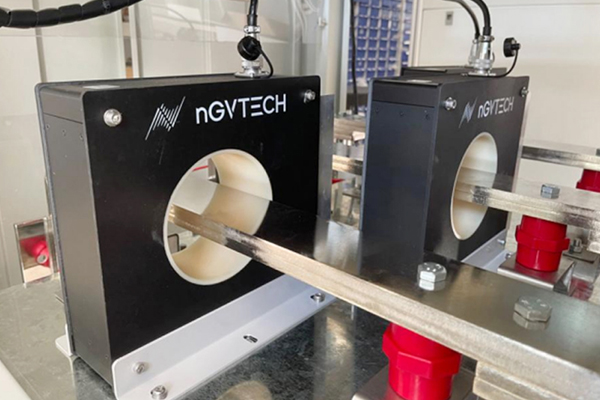
Figure 1: Test fixture of a well-known PCS vendor
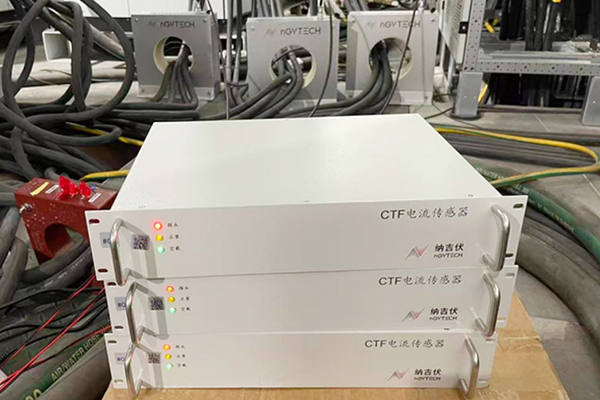
Figure 2: Test site of a well-known PCS manufacturer
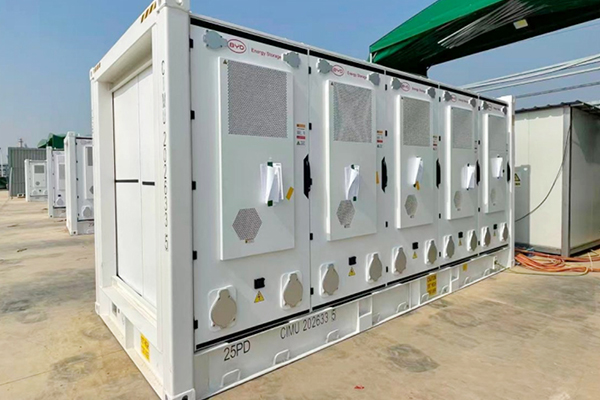
Figure 3, Test site of a well-known PCS vendor
Among the many stages of PCS production testing, the accuracy of current measurement is a critical factor in determining whether a product can leave the factory in good condition. Based on national standards and drawing on Wuxi nGV’s project experience and practical expertise in the field of energy storage inverters, this article summarizes and outlines the current measurement requirements for energy storage inverters.
II. High-precision current measurement is required during the production and testing of energy storage inverters
2.1 The national standard specifies the overall parameters of the PCS and imposes stringent requirements on the current accuracy of the test equipment
2023 year 12 month 28 day, the state issued GB/T 34120-2023 “Technical Requirements for Energy Storage Converters in Electrochemical Energy Storage Systems” and GB/T 34133-2023 “Testing Procedures for Energy Storage Converters.” These two standards replaced the previous versions from 2017 year and were officially implemented on 2024 year 7 month 1, imposing stricter requirements on the performance of energy storage converters and clearly defining current-related performance indicators for PCS products:
(1) PCS, when operating in constant-current mode, shall have a current regulation accuracy of no more than ±5%;
(2) Under constant-power charge-discharge mode, the RMS value of the AC current at the DC port shall not exceed 3% of the maximum DC current;
(3) When operating at rated power, the DC component in the AC-side current shall not exceed 0.5% of the rated output current;
(4) exhibits an active power control deviation at the AC port of no more than ±1% of the rated power under constant‑power charge‑discharge mode. The grid‑forming converter national standard, scheduled to be implemented in the second half of 2026, sets even higher requirements for power control accuracy.
It is important to emphasize that the aforementioned accuracy specifications represent the performance acceptance “threshold” for PCS products themselves, rather than the accuracy requirements of the test equipment.
In metrology, there is a fundamental principle: the accuracy of the measuring equipment must be significantly higher than that of the measured object—typically requiring it to be 3 to 5 times or even more precise—in order to obtain reliable test results. In the energy storage PCS industry, the DC current acquisition measurement accuracy of the energy storage PCS test platform is required to be no greater than 0.2%, while the AC current sensor accuracy is required to be no greater than 0.1%. The current measurement accuracy of power analyzers can reach ±0.03%. These are the true accuracy requirements that the testing process places on current sensors. National standards set stringent performance requirements for PCS products, and meeting these requirements and accurately verifying whether the products comply with the standards necessitates the use of high-precision current sensors whose accuracy far exceeds the national standard specifications.
Notably, in the second half of 2026, two national standards for grid-forming converters—the “General Technical Specification for Grid-Forming Converters” and the “Technical Specification for Electrochemical Energy Storage Grid-Forming Converters”—will officially come into effect. The new national standards set stringent requirements, such as the ability of grid-forming converters to withstand overcurrents up to 3 times the rated current for 10 seconds, and they impose higher specifications for current measurement accuracy, bandwidth, and response speed. This marks the first time that energy storage grid-forming PCS has been governed by national standards, signaling a transition from “industry exploration” to “standards-based implementation.”
2.2 efficiency test requirements 1.5%’s loss, require 0.01%’s measurement accuracy
The conversion efficiency of the energy storage inverter is a core performance metric; for industry-leading products, the maximum conversion efficiency typically needs to exceed 98.5%. This means the difference between input and output is only 1.5% or even smaller. Taking a PCS with a rated power of 1MW as an example, if its efficiency is 98.5%, the current measurement accuracy must reach 0.01%.
In a super factory like the Inovance Technology Xi’an Energy Storage Base, which is a 50GW, every PCS that rolls off the production line undergoes rigorous efficiency and loss testing; the accuracy of the current sensors directly determines whether each unit truly meets its design performance.
It is reported that the Inovance Technology Xi’an energy storage base exclusively uses a certain brand’s CTHF-8000D200 model current sensor. This current sensor features a through-hole diameter of 200mm, which can accommodate busbars or cables of sufficient width; its DC accuracy is 10ppm, ensuring measurement precision across a wide dynamic range; it also exhibits extremely low temperature drift and time drift. Since the commencement of construction at the Inovance Technology Xi’an energy storage base, the current sensors have been operating continuously without failure for nearly one year.
2.3 In battery safety management, the current monitoring accuracy of the energy storage PCS system 1% is the safety bottom line
PCS must operate in conjunction with the battery management system (BMS), and one of the core methods used by the BMS to calculate the state of charge (SOC) and state of health (SOH) is the coulomb-counting method—integrating current over time. For accurate SOC and SOH calculations, the energy storage converter requires current measurement accuracy better than 0.1% or higher.
If the current measurement accuracy is insufficient, it may lead to serious consequences:
If the current measurement is too low, the BMS mistakenly assumes the battery is not fully charged, even though it has already been severely overcharged, which may trigger thermal runaway or even fire and explosion;
If the measured current is too high, it will cause the battery to frequently undercharge, significantly shortening its cycle life.
Although the single‑measurement data deviation of a current sensor with insufficient accuracy is small, it accumulates continuously, leading to distorted power calculations and a long‑term reduction in power plant revenue. As the scale of energy storage power plants continues to expand, the measurement error of a single PCS is amplified by the scale effect of hundreds or even thousands of units, affecting operational efficiency not only at the individual equipment level but also across the entire power plant.
More in-depth analysis and valuable content will be presented in the next installment—stay tuned!