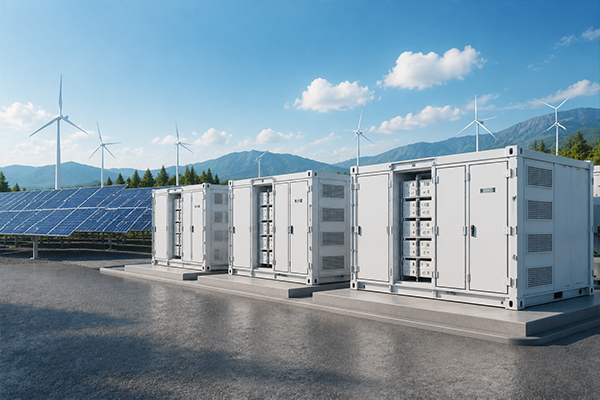
With the widespread adoption of new energy sources, photovoltaic energy storage systems are becoming a key technology for optimizing power grids and managing energy. Whether in residential microgrids or large-scale photovoltaic power plants, achieving efficient, safe, and reliable energy storage management is inseparable from precise monitoring of system currents. High-precision, high-current sensors play an irreplaceable role in energy storage systems.
Technical challenges facing photovoltaic energy storage systems
The photovoltaic energy storage system consists of a photovoltaic array, an energy storage battery pack, an inverter, and an energy management system. Common challenges during system operation include:
1. High current fluctuations: The photovoltaic array experiences significant current fluctuations due to weather conditions, resulting in high current peaks during energy storage charging and discharging.
2. Battery pack equalization management:Multi-string battery packs suffer from current imbalance, which affects their lifespan and efficiency.
3. System Safety: Overcurrent or abnormal current may cause inverter damage, battery pack overheating, or even safety incidents.
4. Intelligent operations and maintenance requirements: operations and maintenance personnel need precise data support to optimize energy storage scheduling and predictive maintenance.
The critical role of high-precision, high-current sensors
High-precision, high-current sensorcan monitor DC high currents in energy storage systems in real time and with high accuracy, providing core data for system optimization. Its technical advantages include:
1. High-precision measurement: accuracy can reach ±0.1%FS, enabling the capture of minute current variations during charge and discharge processes.
2. High-current adaptability: supports currents from 50A to 2000A and even higher, meeting the requirements of large-scale energy storage battery packs.
3. Fast response: has a response time of less than 1ms, enabling real-time protection of the inverter and battery pack.
4. Digital output: is compatible with communication protocols such as Modbus and CAN, enabling system data integration and intelligent analysis.
photovoltaic energy storage system solution
1. Real-time current monitoring
. Integrating high-precision, high-current sensors into the critical circuits of energy storage battery packs and inverters
. Collects charge and discharge current data in real time, accurately monitoring battery status and system load variations
2. Smart battery pack balancing
. By analyzing current data, identify inter-string current differences
. Adjust the charge-discharge strategy to achieve balanced management of the battery pack and extend its service life
3. Overcurrent Protection and Safety Management
. When the system current exceeds the set threshold, the sensor can trigger circuit-breaking or bypass protection
. Prevent damage to inverters and energy storage modules, ensuring the safe and stable operation of the power plant
4. Data-driven intelligent operations and maintenance
. In conjunction with the Energy Management System (EMS), establish a current trend model
. Supports predictive maintenance and remote alarms, reducing the frequency and cost of on-site operations and maintenance
Engineering Practice Reference
In a 500kW photovoltaic energy storage power station, by deploying high-precision, high-current sensors to monitor the main circuit and key energy storage string groups, the system achieves:
1. Charge and discharge efficiency improved by approximately 2~3%
2. The battery pack balancing error is reduced to ±0.5%
3. The operations and maintenance response time has been reduced to within 5 minutes
These data clearly demonstrate that high-precision, high-current sensors are not only measurement tools but also a core component of energy storage system optimization and safety management.
Summary
The development trend of the photovoltaic energy storage system is toward intelligence, digitalization, and high reliability. High-precision, high-current sensors, as core monitoring components, provide precise data support for the system, enabling current monitoring, balancing management, intelligent operation and maintenance, and safety protection. They are a key tool for technicians to optimize energy storage system design and enhance efficiency and safety.