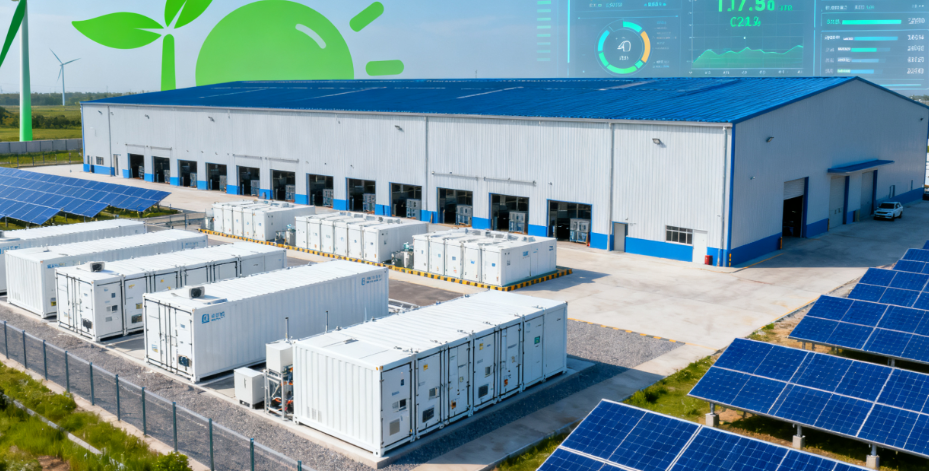
Energy storage technologies, through multidimensional innovation, are systematically addressing the intermittency and instability of renewable energy sources. The core breakthroughs lie in three key areas: technological pathways, system integration, and operational models.
I. Complementary Evolution of the Technical Roadmap
Electrochemical energy storageIt has become the mainstay of short-term frequency modulation,2024In [year], the newly installed capacity of lithium-ion energy storage reached18.2GW/40GWh, accounting for the new type of energy storage83%. BYD’s newly released “Magic Cube” energy storage system achieves4Hourly cycle efficiency breakthrough90%, but the risk of thermal runaway remains a major concern (2024annually worldwide17(Starting from energy storage fire incidents).Sodium-ion batteryIn Jiuquan, Gansu Province100MW/200MWhThe demonstration project has verified—30Stable operation under ℃ conditions, with a lower cost per kWh compared to lithium batteries.28%。All-vanadium redox flow batteryThe world’s largest, built in Dalian, Liaoning Province200MW/800MWhThe power station has solved the challenge of regulating intraday fluctuations in wind and solar farms.
Physical energy storageIn this regard, Jintan, Jiangsu Province60MWCompressed air energy storage project implemented60.2%Cycle efficiency is improved compared to conventional afterburning systems.20percentage points, and the scale per unit is trending toward300MWMoving forward, pumped-storage hydropower remains the mainstay of long-duration regulation.2024Newly approved in the year34Total installed capacity of the project42GW, but constrained by geographical conditions, new forms of gravitational energy storage (such as Energy Vault's35MWhThe concrete block tower system has begun commercial pilot testing.
Hydrogen energy storageIn the “wind-solar-hydrogen-storage” integrated project in Ulanqab, Inner Mongolia,10MWThe electrolyzer, coupled with salt cavern hydrogen storage, enables interseasonal energy transfer; however, the overall system efficiency is only35%. Cutting-edge liquid organic hydrogen carrier (LOHC) technology increases the hydrogen storage density to60kg/m³, Toshiba’s empirical project has verified2000Next-cycle stability.
II. Breakthroughs in System-Level Intelligent Control
The application of shared energy storage (SES) based on the AADMM algorithm at the Jiuquan wind–solar base in Gansu demonstrates that, by dynamically adjusting the penalty factor, the number of iterations is reduced by 47%, and computational efficiency is improved by 54.67%. This system aggregates the 23 energy storage resources from 1.2GW new‑energy power stations, reducing the wind curtailment rate from 12.3% to 4.8%. The deployment of digital twin technology in the Jiangsu Power Grid has achieved a prediction accuracy of 98.7% for the state of the energy storage system, while shortening the response time for dynamic optimization of charging and discharging strategies to 200ms.
Market mechanism innovation has been more groundbreaking: In Guangdong, the spot market in 2024 recorded an intraday price spread of 1.32 yuan/kWh, and energy storage stations leveraged an AI-based strategy engine to boost arbitrage returns by 21%. Shanxi’s newly introduced dual-compensation mechanism—combining “frequency regulation capacity” with “mileage”—has driven the IRR of energy storage participating in ancillary services up to 9.8%. Meanwhile, in the U.S. CAISO market, the Energy Storage Aggregator (ESA) model keeps the response latency of distributed energy storage within 500ms, representing an improvement of 3 orders of magnitude compared to traditional dispatching.
III. Multi-timescale Coordination
Intraday regulation relies on electrochemical energy storage, with State Grid Jiangsu’s 200MW/800MWh lithium‑iron‑phosphate energy storage power station achieving a 15ms‑level primary frequency response. Weekly balancing depends on compressed air energy storage; the advanced adiabatic system developed by the Institute of Engineering Thermophysics of the Chinese Academy of Sciences, designated as 10MW, achieves an energy storage–release efficiency of 68%. For seasonal regulation, the all‑vanadium redox flow battery energy storage system from the Dalian Institute of Chemical Physics has enabled month‑long smoothing of wind and solar output in Baicheng, Jilin, with a capacity fade rate of less than 0.5% per year.
Techno-economic breakthroughs continue: the levelized cost of electricity for lithium-ion energy storage has dropped from 2020 yuan in 0.38 to 2024 yuan in 0.18, with the total lifecycle cycle life exceeding 12000 cycles. For hydrogen-based energy storage, electrolyzer energy consumption has been reduced to 4.3kWh/Nm³, and the proton exchange membrane lifespan has surpassed 8 ten thousand hours. Notably, in 2024, CATL launched its Tianxing energy storage system, increasing the energy density of a 20‑foot container to 5.34MWh, a 2022‑year improvement of 167%.
These technological advances are reshaping the operating paradigm of power systems: according to estimates by the State Grid Energy Research Institute, when the penetration rate of energy storage reaches 15%, the renewable energy accommodation rate in the Northwest region can increase to 97%, and frequency‑limit events can be reduced by 83%. However, it should be noted that resource constraints on electrochemical energy storage (with a global lithium demand gap of 2024 tons per year reaching 12 million tons) and material breakthroughs in hydrogen energy storage (requiring the platinum loading of catalysts to be reduced from 0.3mg/cm² to 0.1mg/cm²) remain key areas for intensive research.