A set of precision coils stably generates a strong magnetic field at extremely low temperatures, while the “eyes” that precisely measure this powerful current come from a high-precision current sensor independently developed by a Wuxi-based company.
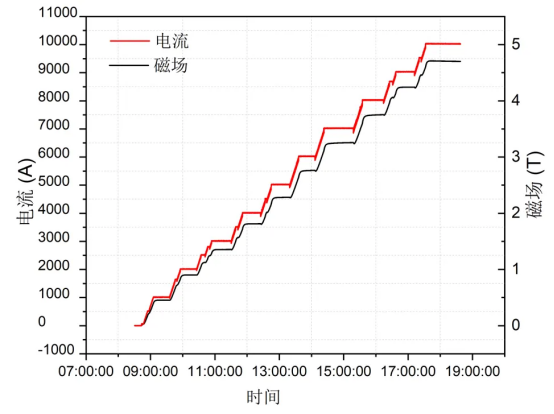
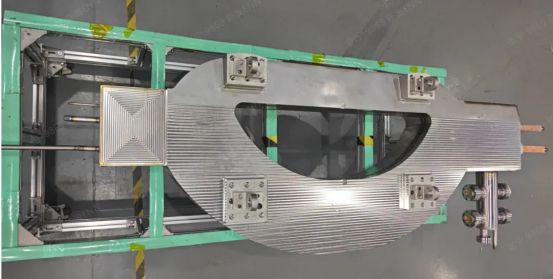
Recently, news of the successful development of the second-generation high-temperature superconducting model coil by ENN Group has drawn industry attention. This breakthrough—featuring “fully independent design and 100% domestic production”—marks a solid step forward for China in the field of fusion energy. Behind this achievement lies a key technology that ensures the precise operation of the entire system: high-precision, wide-range current sensors.
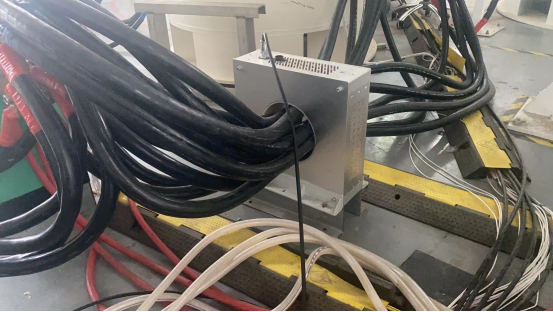
In the laboratory of Wuxi nGV Technology Co., Ltd., technicians are commissioning the CTF series/CTG series current sensors that are about to be delivered. This device, with a measurement range of up to 20KA and an accuracy of 10ppm, is set to undertake critical current monitoring tasks in a nuclear fusion device.
01 Fusion breakthrough, the dawn of commercialization
The successful development of the second-generation high-temperature superconducting model coil by ENN Group marks a critical step forward on China’s path toward the commercialization of fusion energy. This coil has achieved an operating temperature of20K, flow-through10kAThe downward magnetic field reaches4.7TOutstanding performance metrics.
, as the most expensive critical component in a commercial fusion reactor, sees every breakthrough in magnet technology have a decisive impact on the commercialization of fusion. New Ocean’s evolution from first-generation model coils to second-generation model coils is focused on the core objectives of “low cost, high reliability, and commercial viability.”
Behind this technological roadmap adjustment lies careful consideration of the commercial viability of fusion reactor magnets: researching the reliability of high-temperature superconducting fusion magnets under extreme operating conditions, while balancing superconducting tape performance with magnet stability.
02 Current monitoring, the “nerve endings” of the fusion device
fusion devices require precise control of currents as high as tens of thousands of amperes in superconducting magnets to maintain a stable magnetic field environment. In this field, current sensors play a role akin to the “nerve endings” of the human body, performing critical functions of sensing, feedback, and regulation.
The delicate balance among temperature, magnetic field strength, and current density determines the efficiency and safety of a fusion device. The operating temperature of high-temperature superconducting magnets must be maintained around 20K, with a current-carrying capacity reaching the 10kA level, while also achieving a high winding current density of 132A/mm2.
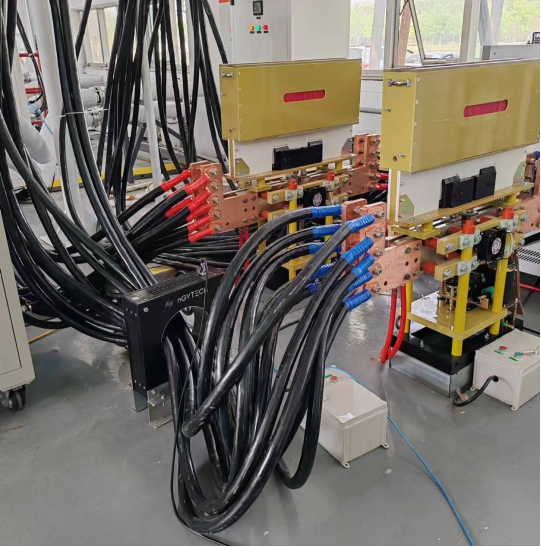
The CTF and CTG series current sensors developed by Wuxi nGV Technology Co., Ltd. were specifically designed to meet these demanding measurement requirements. These sensors feature a range of up to 20KA, an accuracy of 10ppm, and a through-hole diameter of 200mm, enabling them to satisfy the stringent current-monitoring needs of fusion devices.
03 Technical parameters, the benchmark for measuring sensor performance
current sensors play a crucial role in fusion projects, imposing unprecedentedly stringent requirements on their technical parameters. Measurement range, accuracy, and aperture size have become the three key metrics for evaluating sensor performance.
The second-generation high-temperature superconducting model coil of Xin’ao needs to operate at a current of 10kA, while future commercial fusion reactors may require even higher currents. This necessitates that current sensors not only meet present-day requirements but also leave room for future developments.
In terms of accuracy, a measurement precision of 10ppm (ten parts per million) means that, across the full range of 20KA, the error does not exceed 0.2A. This high-precision measurement capability is fundamental to ensuring the stable operation of fusion devices. The through-hole aperture design of 200mm takes into account the actual dimensions of multiple cable conductors within the fusion device, facilitating sensor installation while also preventing measurement errors caused by conductor bending or eccentricity.
04 The wave of domestication, the rise of indigenous technologies
The Xin’ao project has achieved a technological breakthrough in the “100% localization” of its superconducting coils, extending not only to the coils themselves but also to the associated equipment, including current sensors. Wuxi nGV’s current sensors are an important component of this wave of domestication.
Under complex fusion operating conditions, sensors must withstand extreme environments such as strong magnetic fields, low temperatures, and high vacuum. This poses unique challenges to sensor material selection, structural design, and signal processing.
Through independent innovation and technological accumulation, domestic enterprises are now able to provide current measurement solutions that meet the needs of the nuclear fusion field. The development of this capability has laid a solid foundation for the complete self-reliance of fusion energy.
05 An industry-coordinated, ecosystem-win-win future
Advances in fusion technology require coordinated development across the entire industrial chain. From superconducting materials to magnet design, and from current sensors to control systems, innovations at each stage can enhance the performance of the entire system.
The collaboration between Wuxi nGV Technology Co., Ltd. and the ENN project is a prime example of such industrial synergy. In response to the specific requirements of fusion devices, the two parties, through technical alignment and product customization, jointly overcame the technical challenges of current monitoring under conditions of high current, high precision, and complex electromagnetic fields.
As more companies join the fusion energy industry chain, a healthy and complete industrial ecosystem is taking shape. This will accelerate the transition of fusion energy from the laboratory to commercial applications, paving new pathways for humanity’s clean energy future.
At the heart of the fusion device, within those precisely wound superconducting coils, currents reaching tens of thousands of amperes are being accurately sensed and controlled. The sensors from Wuxi nGV operate quietly, converting the invisible current into precise data signals—acting like the “nerve endings” of the fusion device, providing real-time feedback on every pulse of this “artificial sun.”
As projects such as the New Ocean project continue to advance, China’s path of independent innovation in the field of fusion energy is becoming increasingly broad, and the high-precision, wide-range current sensors developed by Chinese enterprises have also gained recognition from industry-leading companies.